Showing posts with label Game. Show all posts

Wednesday, August 31, 2011

3dedrats - A Month of Festivities

Recently at MacICT we have launched our new 3dedrats festival celebrating the latest 3D technologies in education, arts and sciences. We invite you to come join us and play with robots, virtual worlds and video games!

3dedrats is an exciting opportunity to get involved in games, virtual worlds, robotics, arts and science in Australian contemporary education.
Throughout the month of October there will be world first interactive experiences, events, fun competitions, exhibitions and workshops designed for students, families, schools and the general public.
Participation is open to a worldwide audience through online content and virtual experiences as well as events held at multiple venues such as Macquarie University and Sydney College of the Arts. Aimed at all ages, the 3dedrats festival will include world class experiences. Click on the images below to find out how you can be involved:


Right now, if you have a flair for writing, enter our GAME backstory narrative writing competition for a chance to win a prize. The most popular narratives will be chosen to be used in our next challenge - designing a game! Read more on how to enter our competition on the 3dedrats website.

Sunday, October 31, 2010

Reflections: Student as Designers Showcase

Last Thursday, Macquarie ICT Innovations Centre hosted as 'Students as Designers Showcase' where Department of Education teachers and Macquarie University academic staff participated in sessions led by Year 5 and 6 students from Cromer Public School on students as game designers and participative narratives, and Year 11 Caringbah High School students on Learning Design using LAMS. What an incredible job all the students did!


During our Game Design session, five Cromer Public School students talked about their journey as designers and what they learned from this experience. In the guise of investigators, the teachers and University staff then sat with the student game designers, talking to them about their games, what they liked best about their games, how they could improve them and what they learned from designing and building computer games.
1.
We were also very excited to have Sam Doust, Creative Director, Strategic Development at ABC Innovation talk to the students and adults about the augmented reality drama, Bluebird, that he helped write and produce which is set around the leak of Bluebird, a clandestine geo-engineering initiative created by eco-billionaire Harrison Wyld. This presentation highlighted some of the exciting developments in the way we see digital narratives and games in literacy. The possibilities this type of narrative brings to students designing their own interactive narratives, and the depth of learning that would occur, has captured the imaginations of the staff at MacICT.


The hit of the day with the students (and many of the adults present) was the visit from ABC's Good Game hosts Bajo and Hex (aka Steven O'Donnell and Stephanie Bendixen). To the absolute delight of the students, Bajo and Hex mingled with them, chatted about the games the students had made and played some of them. They also talked to the students and adults for 40 minutes about what they like about games, what makes a good game from a player's perspective, how to make a game enjoyable and answered many questions from students and adults. Afterwards, Bajo and Hex stayed around and mixed with the students and were swamped with more and more questions about games and their jobs. This was certainly an experience many students claim has been a highlight of their year!


At both Sam, and Bajo and Hex's session, we had teachers and students from various schools join with us via video conference!


Students and adults also had the opportunity to participate together on an interactive adventure and explore a narrative that Anthony and I wrote with collaboration from my Year 6 students at Cromer Public School. Real and fiction were blended together in this participative narrative that invited the readers to be a part of the story.

When we reflect on what occurred during the sessions we saw, collaboration, cooperation, creativity, innovation, great discussions, teamwork and, we can't forget... some fun thrown in! Thank you to the teachers and academic staff who joined us on this fabulous day and, most importantly, a HUGE congratulations to all the students who, despite some feeling a little anxious, willingly shared with the adults present, their journey into game design. You guys are simply awesome!


Monday, June 14, 2010

Intriguing the Player

The best games tell a story. And the best stories are those that keep you asking for more, where you're desperate to find out what happens next and perhaps a little sad when you get to the end simply because the story's done and there's no more to read.

http://farm3.static.flickr.com/2399/1878611309_906621bc0e.jpg
"And then Ron and Hermione just got married, what a crock."

This week we'll be intriguing and enticing, we'll be talking about games that hook the player in to their world. These are the games that succeed in bringing a world to life.

Capturing your player and drawing them into your world isn't an easy thing to teach. Many people already spend a great deal of their time trying to work out how to teach others how to write a good story. I'm not going to throw my hat into that ring just yet.


Start hard with stream-of-consciousness, then two
quick metaphors to the left and an irony uppercut.

What I can do is tell you why a good narrative is a pre-requisite for a great game and an excellent teaching tool. A good story makes your game memorable, dramatic and interesting without being repetitive and there's never the lack of momentum that haunts lesser games. Games with great stories never run out of steam.

But be careful! A great story alone will not save a game if the game doesn't know how to tell that story. There's been a number of games with great stories, and depending on who you ask this either made them fantastic or fantastically boring. Personally, I love a good story, and for that reason I've excused many games such as Alan Wake, Max Payne and Half-Life 2 when gameplay gets in the way of a good story.

And of course we can't talk about stories in games without looking at my personal favourite: the Metal Gear franchise, and particularly Metal Gear Solid 2: Sons of Liberty.

North American cover art

The brainchild of video game wunderkind and wierdo Hideo Kojima, the Metal Gear series tells the story of rogue secret agent Solid Snake. I've picked MGS2 partly because it wasn't well received by fans when it attempted to take the franchise is a new direction and partly because I'll never forget the time when playing this game late one night, my character got a call on his military comm-phone from his Commanding Officer telling me to turn off my PlayStation and to stop playing the game. I'd gotten so into the story that it came as a shock when his commander called and literally told me to stop playing. It was a confronting moment, but that's what MGS is all about. And no, I'm not going to tell you why. You're just going to have to play the game yourself, but trust me it's worth it.

If you want moments where you're not sure if you're playing a game at all, all brilliantly written into an immersive story, I highly recommend Metal Gear Solid. If you want to come back next week we'll have another piping hot blog post. Next week's focus we're going to sneak a peek inside a real game designer as they work. Thanks for stopping by, see you all again next week.

Stay tuned!

Anthony.

Wednesday, June 9, 2010

The Secret of the Paradigm Shift

Over the last few weeks, we took a look at what not to do when designing a game. The top ten most common mistakes made by game designers can be found here, here, here and here. Now we're going to do an about face. It's not fun looking at where games went wrong. This week we're going to recongnise the games that got it right, and maybe pick out a couple of hints to take away for our own games.


Fig 1: Nintendo employees still celebrating release of
Super Mario Bros, 25 years on.

Specifically, this week we'll be examining a technique called the 'paradigm shift'. It happens when the rules of your game are suddenly and massively changed. The world is reformed around new rules, everything old is new again, and your player basically has to relearn how to play your game. It's easiest to think of a paradigm shift as the twist ending in a movie.


For this reason, the paradigm shift is a rare occurence. There should be at the utmost one per game, and there has to be a good narrative reason for the rules as they once were to come crashing down on the player. But when done right, a paradigm shift breathes new life into a game right before the end, where it's often most needed.


Fig 2: Before the paradigm shift


So who does it right? Alien vs Predator and Rune get the idea of pumping up the player right before the end (sorry, spoilers), but the best example of a paradigm shift lies in the final chapter of BioShock. I'm not going to give away the ending but suffice to say that towards the end the game, and your role in it, is turned on its head. Suddenly enemies are friends and your own survival is no longer the only focus.

Rather than just arming the player with some mega-cannons for a spectacular final boss fight, BioShock basically throws a whole new way to play at the player right before the end, resulting in one of the most stressful and most enjoyable levels I've ever played. The paradigm shift turns BioShock from a basic yet dramatically beautiful shooter into something great.

Next week we'll be continuing this theme: looking at how games can intrigue and entice the player. Once again, thanks for dropping by, looking forward to seeing you next week.

Stay tuned!

Anthony

Wednesday, June 2, 2010

The 10 most common mistakes made by Game Designers - Part 4

Welcome back for this our last in a line of the top 10 most common mistakes made by Game Designers. Part 1, part 2 and part 3 can be found here, in which we detail the good and the bad. But this week, we're rounding up the list with the ugly. The top two most embarassing mistakes made by everyone, Game Designers included. This week we look at the silly mistakes, the ones that break a game, that seem so minor when you're making the game but stand out so obviously when your player gets their hands on the finished product. Let's roll up our sleeves and dive right in to:

2. Bugs, Glitches and Typos
The game starts. A man named 'Sir Charles the Nite' appears, instructing you to "hant down teh Goulden Mask fo Power". You hop on your trusty steed and head into the dark forest, where you encounter horrible Blood Spiders who aren't so horrible when they just stand there like that or bump into each other. You can just walk right past them! You find the Golden Mask of Power and return it Sir Charles, who takes it gladly then asks you to 'hant' it down again.


"Hant it down and brung it bak too me!"

High-profile sinners:
Zero Wing, Max Payne

Why it happens:

Making a whole game takes a lot of time and effort and it's a nightmare working with a deadline looming and your publisher screaming for a finished product. It's amazing that through all this a game gets made at all, so you can forgive the little typos that manage to sneak their way in here and there, right? Of course, it's not only games that fall victim to this. I've submitted many a uni essay, last minute, without bothering to check for typos in the important things, like the heading.

http://farm1.static.flickr.com/43/112456227_327a8b1ed6.jpg

You don't notice it, and frankly you're glad to see the end of it. But your player does (or in my case uni professor). They see these silly mistakes and it's all they can think about. The game itself could be amazing, but somehow your game Dwarf Spelling Forterss has lost some of its glamour. Or maybe it's not spelling, maybe the terrifying Nightmare Guards of the Beyond aren't quite so nightmarish considering they keep bumping into walls and keep getting stuck in invisible holes in the ground.

How to avoid it:
When it comes to avoiding spelling errors, bugs and glitches, the simplest and least helpful response is don't make them in the first place. But not only is that impossible, it ignores the important role of testing your game. Sure, you might be the only person designing or building your game, but you shouldn't ever be the only one testing it. Grab your friends, your parents, your neighbours. Show your game to everyone who will sit still in front of a computer screen long enough. Make them play your game again and again, until they're dead bored with it, and then make them play it again. This isn't about showing off, this is about ironing out the bugs and getting everything absolutely right. And to be honest, it's exactly what professional Video Game Testers get to look forward to every single day.

1. Hogging all the fun
You turn a corner in this dank cave. The sound of dripping water echoes unseen from deep within. Tiny yellow eyes watch your every move from the shadows. You push on, unafraid, towards the mysterious green glow that pulses and hums in the dark. You take one step, then another, and another. And then you might as well put the controller down and make a cup of tea because the next fifteen minutes are going to be dedicated to one long cutscene. Don't get me wrong, this is one incredible cut scene. There's explosions and magic whizzing through the air, and there's a dragon! But the question remains - if this is so cool, why can't we be playing this?


"Hey, I've got this awesome new game, it's called DVD!"

High-profile sinners: Bayonetta, Devil May Cry, Metal Gear Solid 4: Guns of the Patriots

Why it happens:

What is a game if it's not letting you have any fun? It's not a game anymore, it's a movie that stops running if you stop moving your thumbs. Suddenly your player feels a bit like a mouse on a wheel, running round in circles, disconnected from the game. As a side note, these obtrusive cut scenes at their worst dump the player right into the middle of some huge boss fight and expect you to sit through the whole overblown, dramatic fifteen minutes again when you lose - which you will, again and again.

How to avoid it:
Less is more when it comes to cut scenes. There should always be an initial cut scene to quickly introduce the main characters and show off the world. After that cut scenes are handy to show emotional interactions between the heroes and the villains, and that's it. Anything more exciting should be gameplay. It's more engaging and more rewarding and your player will end up caring more about the story when it is shown (through gameplay) and not told (forced down their throat by awkward cut scenes).

And there we have it, the top 10 most common mistakes made by Game Designers. I hope you've enjoyed it, and maybe even learnt something. Next week we'll be looking at how to turn a good game into a great one. Looking forward to seeing you all again next week.

Stay tuned!

Anthony

Sunday, May 16, 2010

Building Games Linked to H.S.I.E. - Government and Democracy

Last week Anthony was contacted by a teacher for suggestions on creating games linked to the Year 6 Human Society and Its Environment units, Government and Democracy. We had a quick brainstorm and below are three ideas for creating games on this topic.


1. Who's the Boss! (Three Levels of Government)

The player has just been elected the sheriff of the island. You will have to perform the roles of three levels of government, local – state – federal. The player can look around the island, seeing the parliament and the courthouse and etc. When the player is ready to get to work they can walk up to a billboard just outside parliament. On the billboard there are three pictures (one representing each level of government). There is a picture of a dog (local government responsibility, catching stray dogs), a pot hole (state government, looking after the roads) and a bank robber (federal government, catching federal criminal and taking them to the courthouse for trial). Clicking on a picture will take you to a level where you have to play out that responsibility. For example, clicking on the picture of the dog will take you to another scene (another part of the island) where there are a number of stray dogs running around. The player will then have to catch all stray dogs. When you have succeeded, you have to click on the dog pound, etc, which will take you back to the main island to attempt the responsibilities of the other two levels of government

2. Aliens in Canberra! (Democracy)

A space ship lands in Canberra (or Sydney etc). The player is an alien, stepping into Australia for the very first time. You have to introduce this alien to democracy, citizenship, voting, etc so they can take this knowledge back to their home planet. Your alien will explore around Canberra, listening to questions and finding hints. These hints are then used when you try to enter your space ship. The ship’s computer won’t let you take off until you have answered three questions about democracy etc correctly. You can take your alien sightseeing to Parliament House and other significant landmarks.

3. Anarchy! (Government)

You are a police officer, and suddenly the world has turned mad! Dogs are running stray, sewerage is polluting lakes, the roads are pot holed and traffic lights aren’t working, crimes are being committed, etc. You have to go around town, finding these problems. You must then determine whose responsibility it is to fix up each mess – local, state or federal government. (It would be good if the game designer placed an even mix of local, state and federal responsibilities). This could also be split into three levels, etc.

If you have any game ideas that are linked to curriculum, we would love to hear from you!

Monday, May 10, 2010

The 10 most common mistakes made by Game Designers - Part 1

When you're designing a game, you've always got to keep in mind the poor player. Your poor player is the entire reason you're making a game. Sure, you could be making a game for yourself but that's a bit like writing a book or drawing a picture for yourself. You're already going to know how it turns out and there isn't any sense of discovery when you play it.

http://farm4.static.flickr.com/3035/3028314931_53d4aa5fc2.jpg

Today, we're going to get to know your poor player. We're going to take a look at the 10 most common mistakes made by Game Designers, and how to avoid them. These aren't just 10 mistakes I've seen teaching Kahootz in schools, or 10 mistakes I alone have made while designing games. These are the top 10 mistakes that are being made by even some of the best designers.

10. Making the game too hard
You've created an elaborate puzzle game where the player has to pit their wits against a series of fiendishly difficult riddles, math problems and logic patterns, but your player has just spent the last hour trying to work out the code to get in the front door.

http://farm1.static.flickr.com/201/490907537_6724705f74.jpg

High-Profile Sinners: Myst, The Castle of Dr. Brain, The Legend of Zelda

Why it happens:
You've got some great puzzles for a game. They're going to really confuse your player but they're obvious if you think about it, right? Unfortunately you aren't always going to be around if your player can't work out why the door knob won't turn, even though you know it's obviously because they need to pick the lock.

Hot to avoid it:
Simply put, your player might need a little bit more of a hint. Is there a way you could use sound and pictures to suggest that the door is locked? Maybe a thunking sound or an animation that shows the door getting caught on something just as it starts to open? This is called player-feedback, and it lets your player know what reaction they see whenever they try to do something in the game. Player-feedback is critical, it helps the player feel more involved in the game and teaches the player some of the rules of the game (such as, sometimes you have to pick the lock to open a door).

9. Making the game too easy
You've got another great puzzle, but if you make things too difficult you're going to end up with a frustrated player. You give them hints and make everything as clear as possible. Suddenly you find no one wants to play your game because it's too easy. What went wrong?

http://farm3.static.flickr.com/2469/3665571072_0bc5baf25b.jpg?v=0

High-Profile Sinners:
Red Faction: Guerilla

Why it happens:
It happens when game designers try to make their game easier, but accidentally go too far and take away all the challenge by giving the wrong kinds of hints. Players are very happy to play a game that is challenging or difficult if they have clear objectives. Hints and player-feedback should not patronise the player by giving away every little secret or lighting the way to each little hidden treasure. Learning and exploring is what makes a game fun, don't let the hints take away the fun.

How to avoid it:
Be careful not to give too much away when your giving hints. Game Designers have to be very careful to balance what hints they give out and when. Hints and player-feedback are important, but it's the way you give those hints that are the key. As any writer will tell you: show don't tell. Instead of using huge swathes of text to signpost every little part of your game, maybe you could use sounds or images. Let's say, for example, that your player walks into a toxic gas cloud and falls ill. A game might flash a warning text on the screen telling the player where to run to for medical attention, but a good game might make everything you see turn green and the character might start limping and struggling to walk in a straight line. This sudden change leads to a sense of urgency and forces your player to engage with your game, to remember where they last saw a first aid tent for example.

8. Teasing the player
Your player has just discovered a wonderful new magic power, or a fantastic new piece of equipment that suddenly makes even the most difficult enemy a mere distraction. It's fun playing with their new 'superpowers'. But then they're taken away, without warning, never to return.

Where did I put my black-hole anti-matter blaster? I had it just a second ago...

High-Profile Sinners: Half-Life, Splinter Cell

Why it happens:
It's cool when you get a new toy, especially when that toy is a powerful mega-robot with hover jets and invisibility.

There it is, hovering behind the other invisible mega-robot.

Game Designers love giving players new toys, and players love getting new toys. When done well getting a new 'toy' revitalises the game and gives the player more enjoyment out of familiar, predictable environments as the player effectively relearns how to interact with the game. The problem is that sometimes these toys are too powerful. Nothing is a threat to the player anymore. The game is no longer any fun without the threat of defeat. The Game Designer has realised that they've made a mistake by letting the player get so powerful. So the game pulls a swifty: a contrived reason is found for the player to lose these new-found toys - whether that be theft, betrayal or unexpected catastrophic meltdown. It's not clean and it's not pretty, but it happens.

How to avoid it:
Let me clarify that the problem isn't giving players these toys in the first place, in fact offering treasures and toys like this can be a great way to reward your player and keep them engaged in your game. The problem is the way in which these toys are suddenly yanked out from under your player. It's perfectly acceptable, and in fact quite fun, if there's a good reason for suddenly losing all your hard earned treasures. Good Game Design encourages a strong story. If you're going to give your player a toy, make sure they know why they're getting it and make sure they understand the limits you've placed on using it. For example, a catapult would be great fun to roll around a medieval battlefield in, reigning down unmitigated destruction. But once the battle is won, there's no use in a lumbering catapult when your actual job (monster-hunter) requires stealth and good aim. In fact, you only have such a machine because the King lent it to you, he may well order you to return his expensive contraption once you've saved the day.

We'll continue the list over the next few weeks until we reveal the number one most common mistake a game designer can fall foul of. Hopefully we'll see you all again soon.

Stay tuned!

Anthony

Tuesday, May 4, 2010

Getting To Know Genres

Talking about the genres of computer games is a bit like looking at shades of red trying to call one maroon and one burgundy, at least that's the case nowadays. If we go back only ten or fifteen years the genres were strictly separated, you could tell just by looking at the box whether you were going to get an empire building game or a first person shooter. The reason for this lay more with accepting the hardware limitations of older computers than any strong desire to keep the genres apart.

Then the year 2000 came and game designers began to have more and more processing power to play around with. Their customers steadily bought better and better computers that could handle larger worlds with more intensive 3D graphics. Suddenly designers could make the games they wanted to make. If you wanted to tell a classic gangster story in sprawling New York with gun-fights and car chases, you could. If you wanted to tell an ultra-realistic Post-Cold-War spy story with all the gadgets of a modern James Bond and the twists and betrayals of a thriller, you could. If you wanted to tell the off-the-wall story of a young boy with psychic powers attending a Summer Camp for Psychics only to discover there's a hidden monster out there sucking people's brains out of their heads, you could.

Those three games exist and they were all made almost ten yeas ago, and in order they are Grand Theft Auto 3, Splinter Cell and Psychonauts. In an aside, I cannot recommend Psychonauts enough - it blurs tongue-in-cheek, off-the-wall hilarity with a deeply emotional story as you travel through the minds of your camp-mates cleaning up their Freudian tics and emotional baggage. And best of all, in terms of genre Psychonauts can claim to be (at different times) a shooter, a racer, a puzzle-game, a turn-based strategy game like Risk and a whole lot of fun.
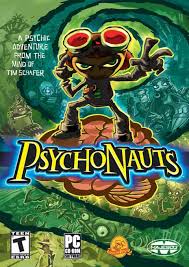


Why talk about genres then? If all these current games are a pastiche of different genres and game-types, what's the use of talking about genres at all? Well, it's simple. To use anything you have to know about it, even on a basic level. Genres are like the archeology of games, they reflect the ancestry of a game. Now that game designers have the computer power to tell whatever story they like, good game designers have to know about the narrative techniques of games in the same way that a good writer has to know about the science-fiction genre and the film-noir genre to tell their story about gritty robot detectives trying to track down a serial killer with telepathy.

Sadly this idea has yet to be realised

Keeping in mind that in recent games the genres can be very blurred, it's important to know what makes up each genre so that you, as a good game designer, can identify genres where they are used and apply that knowledge to your own games. Let's have a closer look at some of the more popular genres that most games can claim a connection with.

The Empire Builder
You are the leader and commander. Your people look to you to take this newly-founded colony and turn it into a vast empire. Protect your citizens, build them houses and temples and walls. Manage your resources carefully. Build an army and crush all others beneath your heel.

Also known as: Real-Time Strategy (RTS) or Turn-Based Strategy (4X)

Real examples: StarCraft, WarCraft, Age of Empires, Civilisation, Master of Orion

The key elements of an Empire Builder or RTS are Resource-Management and Unit-Management from a Bird's Eye View perspective. Simply put, you sit in the clouds looking down on your growing empire. Everything costs money, whether that is food, wood, gold or some other natural resource so establishing an economy is fundamental to your survival. Without an income you can't support your armies, or house your citizens.

The game can play either in real-time, that is to say without pauses or breaks in play, or in a turn-based style, where action is broken up into turns - first you move your armies then your opponent moves his.

The Shooter
You are a one-man (or one-woman) army. You are the quintessential Hollywood Hero, often going out with guns blazing to take on a horde of baddies.

Also known as: First-Person Shooter (FPS)

Real examples: Unreal Tournament, Call of Duty: Modern Warfare, Counter-Strike

Shooters are the games that concerned parents usually point to when they say games are too violent. And, to be honest, in terms of the popular games there really isn't much to say to contradict this claim. The shooter is at its heart a violent game, the object is generally to be the last man standing. However, just looking at the violence is missing the point. It's almost like looking at a piece of art and complaining about the brand of paint used. Games do not need to be violent, however some games use violence because it provides simple ways for the player to identify with and appreciate what's going on in the game. This is a topic I feel strongly about, and it's something I'll deal with in greater depth in another post. Shooters are competitive and rewarding on a visceral level, thus shooters use gore as both a threat to the player (if I lose, I die) and a reward for good work. Guns are a big feature, whether they are realistically portrayed or fantastical objects of high-technology and the story (if there is one) reinforces to the player a 'One against a thousand' mentality to capture the player's emotional interest.

A contemporary twist on shooters are Team-Based Shooters: games where you have to rely on your team-mates for success. These games often give the player a choice of characters, each with their own strengths and weaknesses. To win, all roles have to be played together, like an orchestra. For this reason the competitive spirit is drawn from teamwork, winning as a team rather than single-handedly taking on your opponents out-right, and the violence and gore doesn't need such an emphasis to trigger the player's emotional reaction.

The Role-Playing Game
You are a hero of fantasy! You are fighting valiantly to save the world from orcs and monsters and dragons. You can be a paragon of virtue or a heartless mercenary working for the clink of cold coin in your pocket. The world is an exciting and dangerous place, and it's your job to explore its darkest corners.

Also known as: RPG

Real examples: Dungeons and Dragons, Baldur's Gate, Mass Effect, World of Warcraft

The RPG is perhaps the oldest of video games and at some level all games are RPGs. All games give you a role to play which serves as an emotional hook and ensures you have some investment with the game. However, above all an RPG gives you choice. Are you good or evil or just thoughtless? You see a man being chased by a mob - do you leap to the man's aid or do you join the mob? The world is yours and there is no wrong choice to make. RPGs are very story-driven, typically set in a fantasy universe of swords and sorcery though you're only limited by your imagination. A player plays an RPG to have a story unfold around them and to grow more powerful with every act. With each small victory you get experience points (XP), and when you reach a certain number of points you level up, suddenly becoming stronger, more capable, more hardy.

Contemporary games take RPGs down a slightly different route. While there's still a story line behind Massively-Multiplayer Online Role-Playing Games (MMOs) like World of Warcraft focus on racing up the levels and competing against other players. Players are rewarded for investing the most time in the game. The more you play, the better your armour and your sword will be, the more impressive you look to other players and the stronger you are in the field of battle.

There are other genres out there, including the Racing Game, the Puzzle Game and the Arcade Game. Maybe we'll come back to the others at another stage but for now the three main genres are a good starting point. I'll end with a piece of advice: rather than looking to build a game around a genre, take a hint from our current games and build your genres around the game. If you've made a high fantasy world of knights and goblins but you want to add horseback racing go for it. If you want a science-fiction shooter that expects the players to match symbols on a circuit board to hack into computers, don't let the shooter genre stop you. Good game designers use genres as guides rather than limits. Let your imagination run free!

Next time we'll be looking at the top ten mistakes a first time game designer makes, and how to avoid them. As always, I absolutely welcome any comments and questions. Looking forward to seeing you again next week.

Stay tuned!

Anthony